Paving • San Diego
Paving in San Diego
Upgrade your property with our top-quality paving services in San Diego. Whether it’s driveways, patios, walkways, or commercial spaces, our expert team delivers durable, attractive paving that stands the test of time.
★ 4.9 Google (48+) • Licensed & Insured #1149801 • Free Estimates
Get Your Free Estimate
No pressure. Free on-site design & estimate.
Quick Answer
Upgrade your property with our top-quality paving services in San Diego. Whether it’s driveways, patios, walkways, or commercial spaces, our expert team delivers durable, attractive paving that stands the test of time.
Overview
Useful Quick Links and References
As a licensed and insured local design-build company serving all of San Diego County since 2015, we handle your project from the first design sketch to the final walkthrough, from start to finish.
What’s Included
- Paver driveways
- Patios & walkways
- Pool decks
- Proper base prep
- Drainage & grading
- Sealing & finishing
The Basics
What Is Paving?
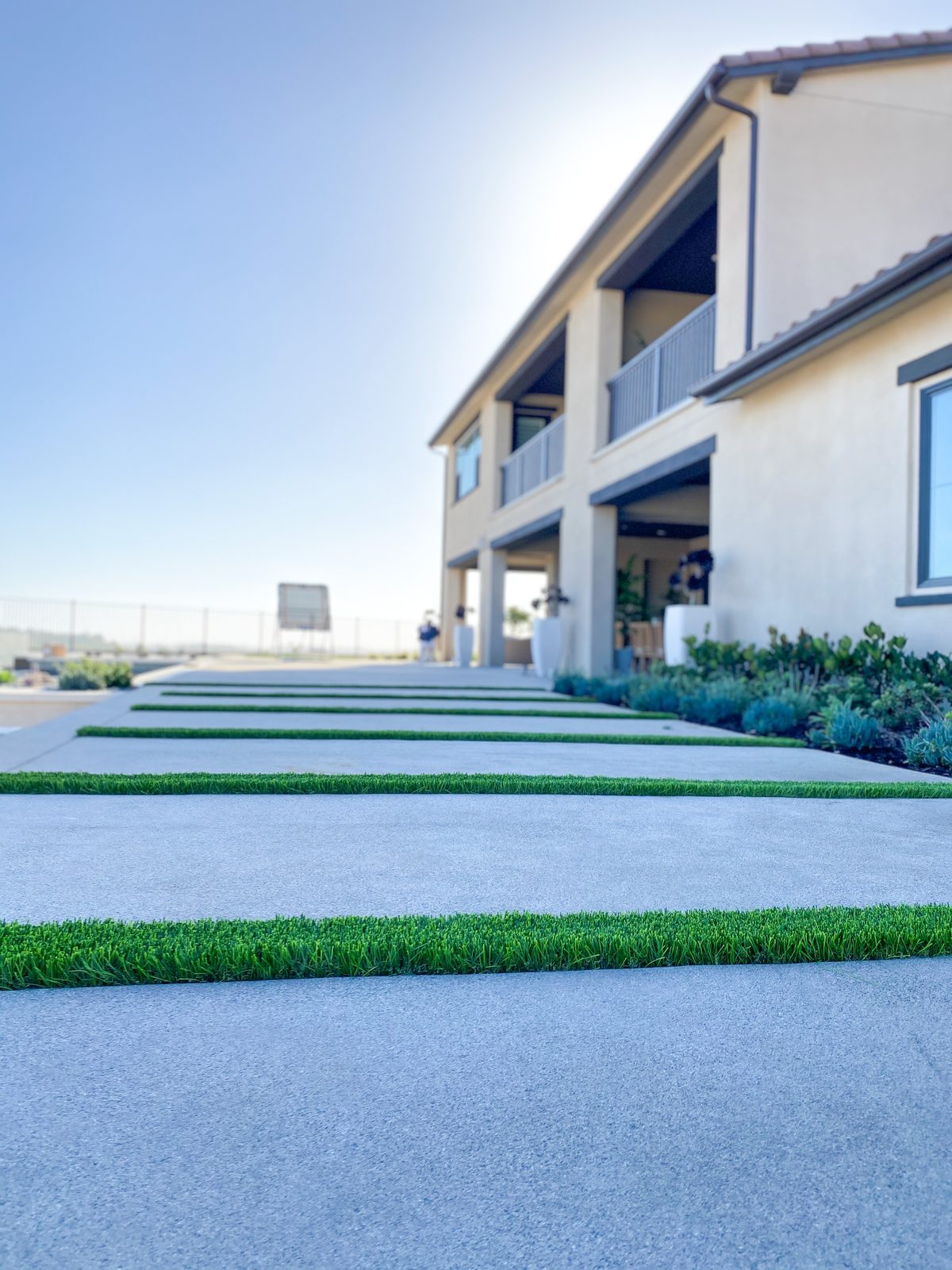
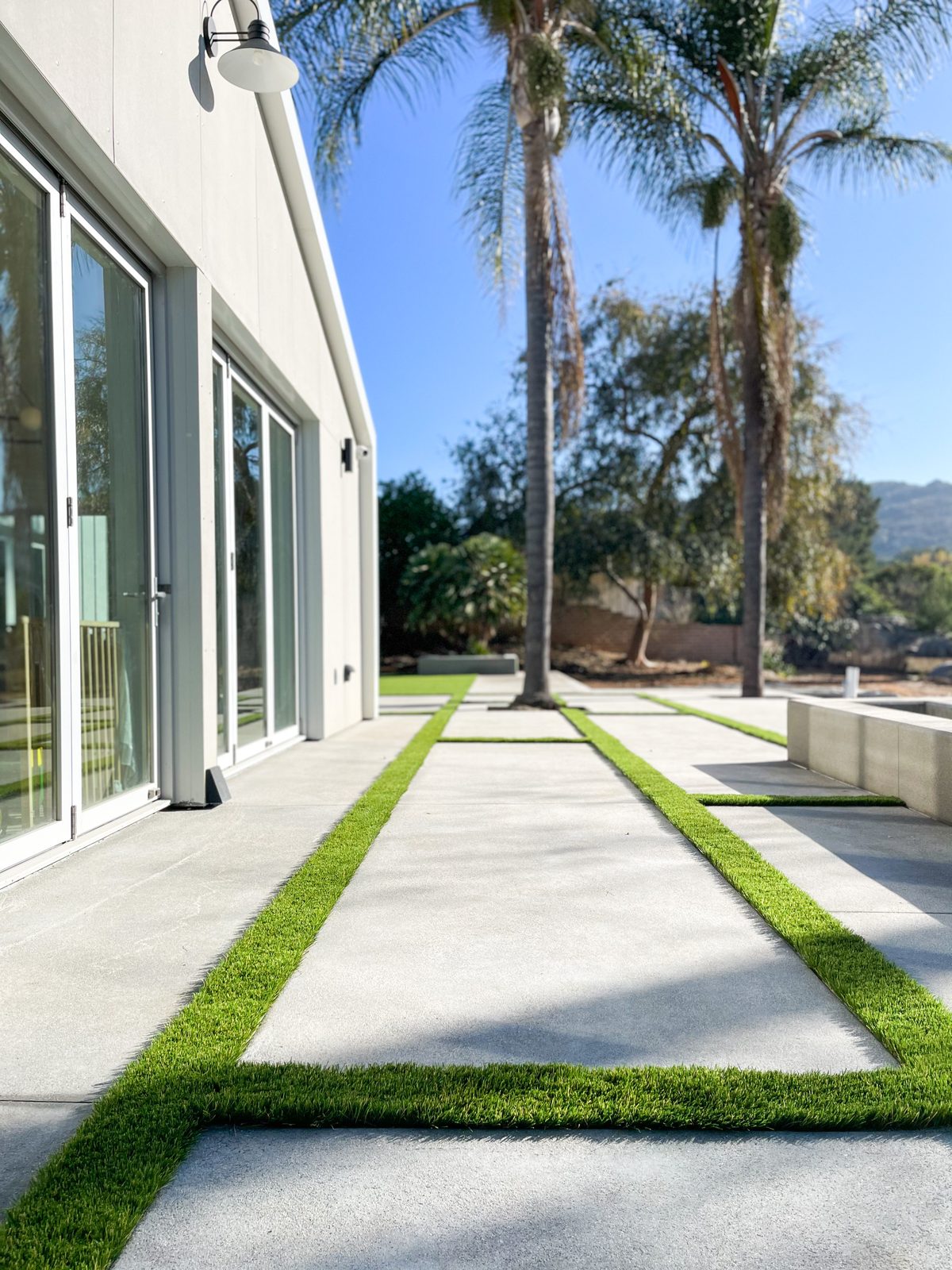
Paving is the process of creating a hard, durable surface over prepared ground for driveways, patios, walkways, or parking areas. It covers several methods, including poured concrete, interlocking pavers, asphalt, and natural stone, each set over a compacted base. Good paving balances load capacity, drainage, and appearance so the surface stays level and intact for decades.
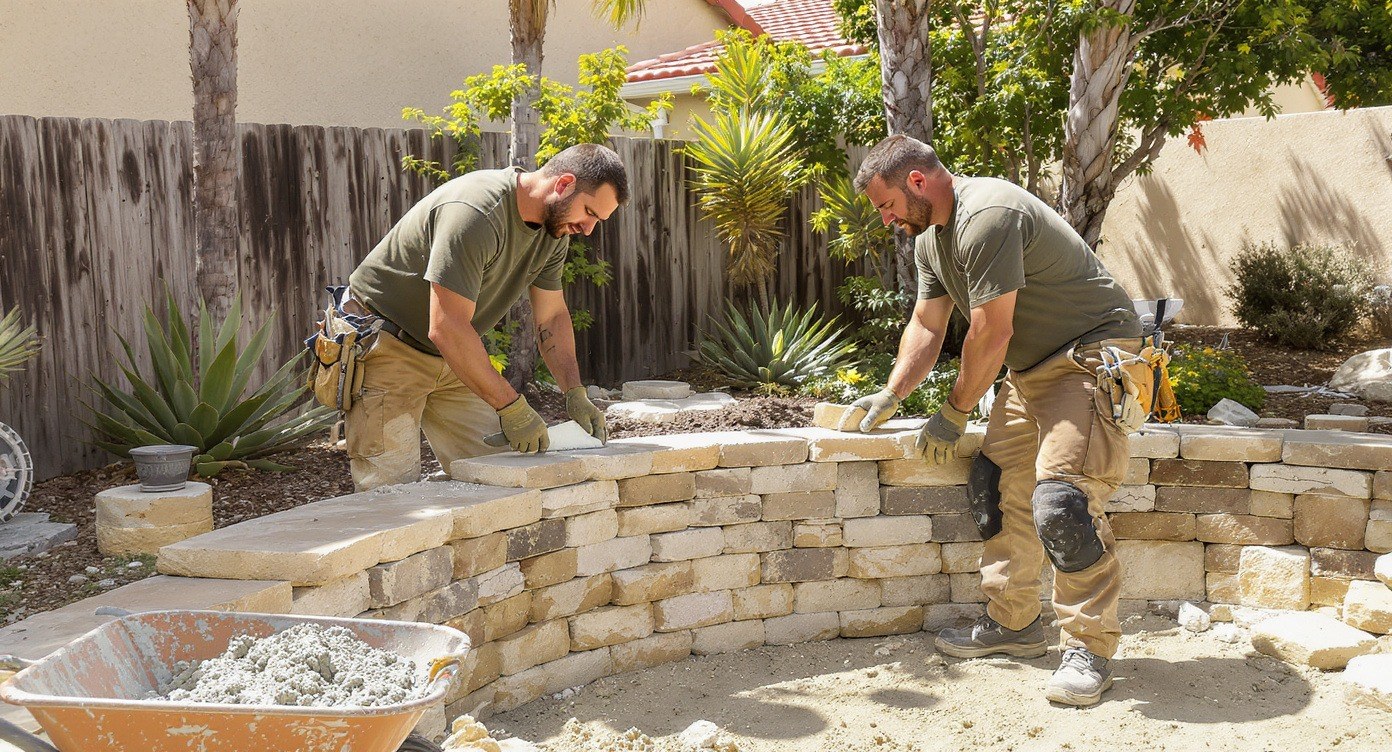
Paving in San Diego uses a few core materials. Poured concrete with broom, stamped, or colored finishes gives a seamless, low-cost surface. Interlocking pavers from Belgard, Angelus, Acker-Stone, and Techo-Bloc flex with the ground and allow single-unit repairs. Asphalt suits long driveways and private roads at a lower price. Natural stone and decomposed granite (a crushed granular stone that packs into a firm natural surface) fit garden and pathway uses. All hard paving sits on a compacted Class II aggregate base, and permeable options let rainwater filter through instead of running off. These brands are options we work with, chosen to fit the surface and budget rather than a single required line.
Our Process
How We Build Paving in San Diego
Assessment and layout
We evaluate how the surface will be used and the loads it must carry, then lay out the shape, grade, and drainage direction for the project.
Excavation and subgrade prep
The area is excavated to the depth the base and surface require, and the subgrade is graded to shed water away from structures.
Base installation
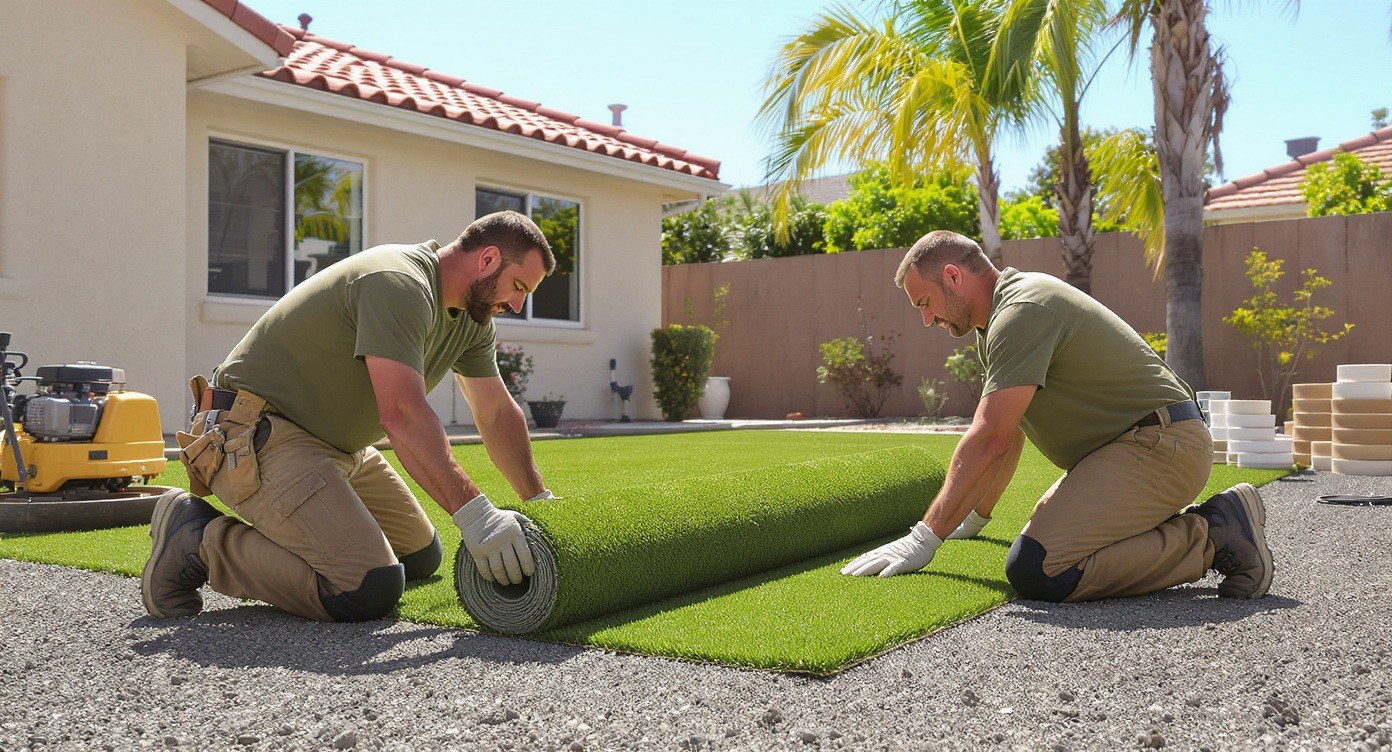
We add and compact Class II aggregate base in lifts with a plate compactor or roller, building the stable foundation that carries the paved surface.
Reinforcement or bedding
For concrete we set rebar or wire mesh and forms, and for pavers we screed a bedding layer of sand or screenings across the compacted base.
Surface placement
Concrete is poured and finished, pavers are laid to pattern, or asphalt is placed and rolled, each to the tolerances the surface needs.
Jointing and edging
Concrete gets control joints cut to guide cracking, paver joints are filled with polymeric sand, and edges are restrained so the surface holds together.
Curing and finishing
The surface cures or sets, sealer is applied where useful, and we clean the site and confirm the grade drains correctly before handover.
Cost
How Much Does Paving Cost in San Diego?
Paving costs in San Diego depend heavily on the material. A basic broom-finish concrete surface runs about $7 to $12 per square foot, stamped or colored concrete about $15 to $28, and interlocking pavers roughly $21 to $36 for standard concrete units and more for stone or porcelain. Demolition of an old surface adds around $2 to $5 per square foot, and drainage, difficult access, and slope can add $1,500 to $5,000. Every job begins with a free on-site estimate matched to your material and layout.
San Diego Specifics
Built for the San Diego Climate
San Diego’s zone 10a to 10b climate skips frost damage, so the main paving concerns are winter drainage, expansive clay soils, and summer sun. Inland areas like Poway and El Cajon carry clay that swells and shrinks, cracking rigid concrete unless control joints and a solid base are used, while pavers flex with that movement. Coastal salt air favors durable, sealable surfaces. A properly compacted Class II base and grading that carries rain away from the home protect any paved surface, and permeable paving helps lots that manage heavy seasonal runoff.
Related Services
Complete the Project
Homeowners who take on this project often pair it with these.
How It Works
Four Steps. Zero Surprises.
Free Design Consultation
We visit your property, listen to how you want to use the space, and take measurements. No pressure, no charge.
Design & Written Estimate
You get a clear design concept and an itemized written estimate, so you know exactly what you’re getting and the price.
Built In-House
Our licensed, insured team builds your project on schedule, keeps the site clean, and keeps you updated.
Walkthrough & Enjoy
We walk the finished space with you, handle any last details, and leave you with a yard built to last.
Why Choose Us
Why San Diego Homeowners Trust Us
Reviews
What San Diego Homeowners Say
Rated 4.9★ across 48+ verified Google reviews.
Explore More
Other Services We Offer
Service Area
Proudly Serving All of San Diego County
If you don't see your area listed, call us at (858) 264-2697 and we'll let you know if we service your area.
From the coast to the inland valleys. Don’t see your area? Call (858) 264-2697 and we’ll let you know.
Frequently Asked
Paving in San Diego: FAQs
How much does paving cost in San Diego?
It depends on material. Broom-finish concrete runs about $7 to $12 per square foot, stamped or colored concrete $15 to $28, and interlocking pavers $21 to $36 for standard concrete units. Asphalt tends to be cheaper for large driveways. Demolition of an existing surface adds roughly $2 to $5 per square foot on top of the paving itself.
What is the best paving material?
Poured concrete is the value choice for a seamless surface, pavers from Belgard or Angelus flex with clay soils and allow spot repairs, and asphalt suits long driveways on a budget. In San Diego’s expansive-clay inland areas, pavers often outlast rigid concrete because they move with the ground instead of cracking. The right pick depends on load, look, and budget.
How long does paving take?
A typical residential paving project takes 3 to 8 working days depending on size and material. Concrete is placed quickly but needs several days to cure before heavy use, while pavers take longer to lay but are ready sooner. Base compaction and any demolition of an old surface drive most of the timeline.
Do I need a permit for paving?
Ground-level patios and walkways usually do not need a permit in San Diego, but a new driveway approach connecting to the public street does, and grading near slopes can trigger review. Impervious surface limits may also apply on some lots. We check the requirements for your address before starting any paving work.
Is permeable paving worth it in San Diego?
Permeable paving lets rainwater filter through the surface into the ground instead of running off, which helps lots with drainage problems and can support stormwater and WaterSmart goals. It costs a bit more than standard paving because it needs a specialized open-graded base, but for yards that pool water in winter or face runoff limits, it is often worth the added expense.
How do I maintain a paved surface?
Concrete benefits from sealing every few years and prompt repair of cracks before water gets underneath. Paver surfaces need refreshed polymeric sand in the joints and occasional resealing. Asphalt needs periodic seal coating. Across all types, keeping drainage clear so winter rain sheds away from the surface is the single most important upkeep task in San Diego.
What causes paving to crack or fail?
The usual causes are an inadequate or poorly compacted base, missing control joints in concrete, and poor drainage that lets water undermine the surface. San Diego’s expansive clay soils make base quality critical, since clay movement cracks rigid slabs that were not built with proper joints and reinforcement. Pavers resist this because individual units shift instead of breaking.
Paving vs. gravel: which lasts longer?
Poured concrete and pavers last 25 to 50 years and carry vehicle loads, while loose gravel or decomposed granite is cheaper but needs regular refreshing and does not hold up to heavy traffic. Gravel and DG work well for garden paths and informal areas, but for driveways and main patios, hard paving delivers far longer service and lower long-term upkeep.
The Difference
What Sets San Diego Landscaping Apart
A licensed, in-house design-build crew is a very different experience from a one-off contractor. Here is what that looks like.
With San Diego Landscaping
- One in-house design + build crew, start to finish
- Itemized written estimate, the quoted price is the price you pay
- Licensed & insured, CSLB #1149801
- We pull the permits and handle code for you
- Property protected and the site cleaned every day
- Local team, backed by real Google reviews
- Backed in writing by the No-Surprises Guarantee
Typical Landscapers
- Project handed off to rotating subcontractors
- Vague verbal quotes and surprise change orders
- License and insurance not guaranteed
- Permits left for you to figure out
- Messy sites and loose, inconsistent cleanup
- Out-of-area crews with little local track record
- No real guarantee once the job is paid
Get Your Free Design & Estimate
Tell us about your yard and we’ll come out, design the space, and give you an honest written estimate. No pressure, no obligation.
★ 4.9 on Google (48+) • Licensed & Insured #1149801 • Local Team Since 2015